

“Root canal” might be the two most feared words in dentistry — but the reputation is mostly out of date. Modern root canal treatment is closer to getting a filling than the horror stories suggest, and it’s specifically designed to relieve pain, not cause it. This guide walks through exactly what happens, step by step, so there are no surprises on the day.
We’ll also cover what happens afterward — because protecting the tooth once treatment is done matters just as much as the procedure itself.
Why a Root Canal Is Needed
Inside every tooth, beneath the enamel and dentin, sits the pulp — soft tissue containing nerves and blood vessels. When that pulp becomes infected or inflamed, it can cause significant pain and, left untreated, lead to a dental abscess or loss of the tooth entirely.
A root canal is typically recommended when:
- Deep decay has reached the inner pulp of the tooth
- A crack or chip has exposed the pulp to bacteria
- Repeated dental procedures on the same tooth have irritated the pulp over time
- You have persistent pain, swelling, or sensitivity to hot and cold that doesn’t settle
Worth knowing: A root canal is a tooth-saving procedure, not a last resort before extraction. The goal is specifically to keep your natural tooth rather than remove it — extraction is usually only considered when a tooth truly can’t be saved.
Root Canal Treatment: Step by Step
Most root canals take around 60–90 minutes, though molars with multiple canals or more complex infections may need a second appointment. Here’s what actually happens, in order.
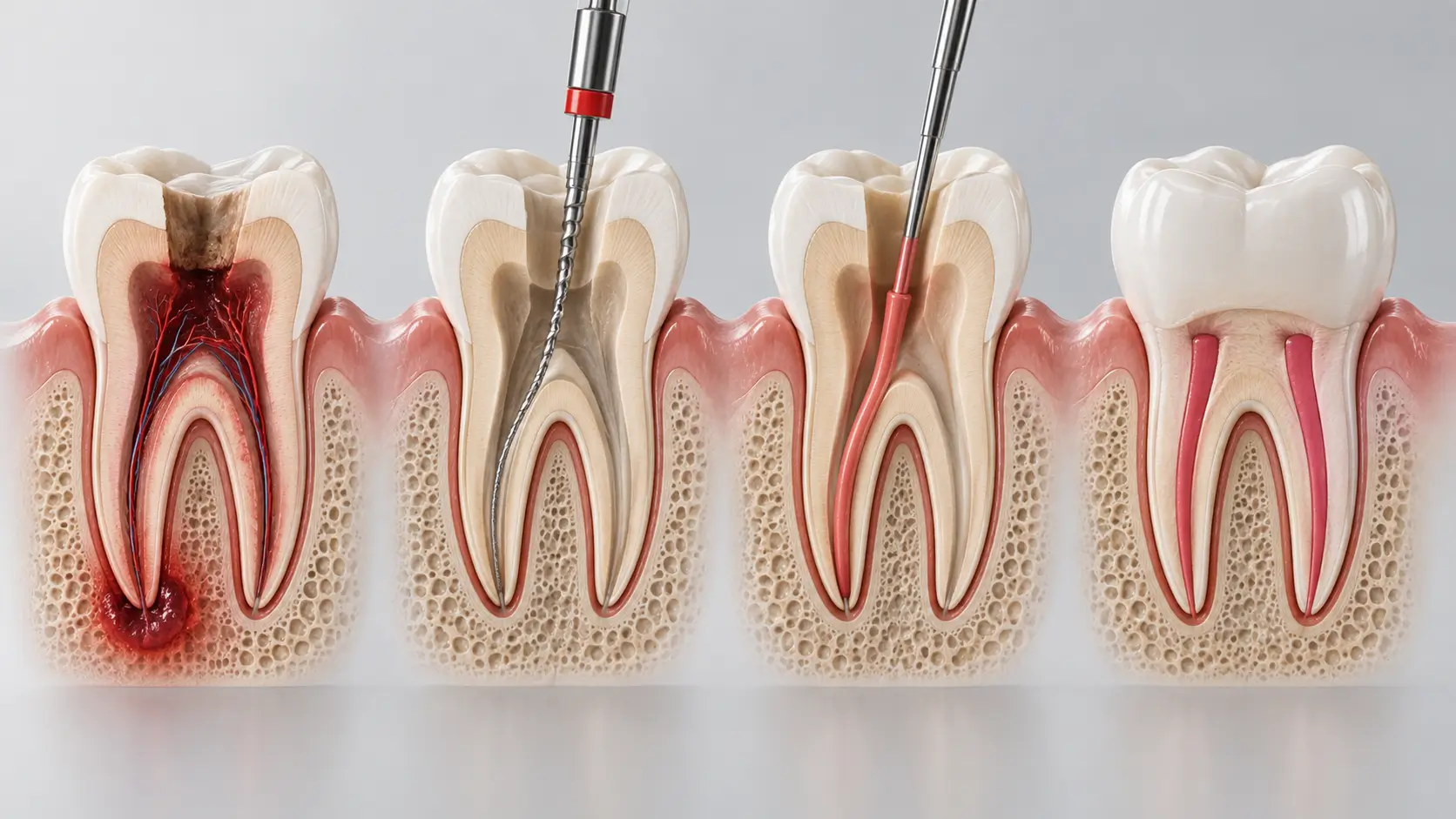
- Diagnosis & X-rayYour dentist takes an X-ray to see the extent of the infection and confirm a root canal is the right treatment before starting anything.
- Local anesthesiaA local anesthetic numbs the tooth and surrounding area. You’ll feel a small pinch, and then nothing — the numbing takes effect almost immediately.
- Isolating the toothA small rubber sheet, called a dental dam, is placed around the tooth to keep the area clean and dry throughout the procedure.
- Removing the infected pulpA small opening is made in the top of the tooth, and the infected or inflamed pulp is carefully removed from inside.
- Cleaning & shaping the canalsThe inside of the tooth’s root canals is thoroughly cleaned, disinfected, and shaped to prepare it for filling.
- Filling & sealingThe cleaned canals are filled with a biocompatible material and sealed to prevent bacteria from re-entering.
- Temporary fillingA temporary filling closes the access opening until your permanent restoration — a filling, inlay/onlay, or crown — is placed at a follow-up visit.
Does a Root Canal Hurt?
This is the question behind almost every root canal search, so let’s answer it directly: no, not during the procedure. Local anesthesia fully numbs the tooth and surrounding tissue before any work begins, and your dentist won’t proceed until you’re properly numb. Most patients describe the experience as feeling similar to having a cavity filled — some pressure and vibration, but no sharp pain.
In fact, the pain most people associate with root canals is usually the pain of the infection itself, beforehand — which is exactly what the treatment is designed to relieve. Once the infected pulp is removed, that source of pain is gone.
Worth knowing: Some mild soreness or tenderness in the days after treatment is normal — that’s your tissue settling after a dental procedure, not a sign anything went wrong. It’s usually manageable with over-the-counter pain relief.
Recovery: What to Expect in the Days After
Recovery from a root canal is usually straightforward, and most patients return to work or normal activities the very next day.
Stick to Soft Foods
For the first day or two, eat gently — soup, yoghurt, scrambled eggs, mashed potatoes — and avoid chewing on the treated side.
Manage Mild Soreness
Over-the-counter pain relievers like ibuprofen or paracetamol are usually enough to manage any tenderness in the first few days.
Keep Up Oral Hygiene
Brush and floss as normal, being gentle around the treated tooth until any sensitivity settles.
Attend Your Follow-Up
Your final restoration — filling, inlay, onlay, or crown — is placed at a follow-up visit, and it’s essential for long-term success.
When to call your dentist: Mild tenderness is expected. Swelling, severe or worsening pain, or a bad taste that doesn’t resolve are not — contact your dentist promptly if you notice any of these.
Protecting Your Tooth Afterward: Crown, Inlay, or Onlay?
This step matters more than most patients realise. Once the pulp is removed, the tooth no longer has its internal blood supply — over time this can make it more brittle and prone to cracking under normal biting force. A permanent restoration on top isn’t optional finishing touch; it’s what protects the tooth long-term. Which restoration you need depends mainly on how much healthy tooth structure remains after treatment.
Crown — full coverage
A crown covers the entire visible tooth and is generally recommended for molars, teeth that take heavy chewing force, or cases where a significant amount of tooth structure was removed to access the infection. If a crown is the right option for you, it’s worth understanding the material choice too — we cover that in our guide to comparing crown materials.
Inlay or Onlay — a more conservative option
When enough healthy tooth structure remains, an inlay (fitting between the cusps) or onlay (also covering one or more cusps) can restore and protect the tooth without covering it entirely. This preserves more of your natural tooth than a full crown, and is often suitable for premolars and cases with less extensive damage.
- More of your natural tooth is preserved compared to a full crown
- Still provides the strength needed to protect a root-canal-treated tooth
- Best suited to teeth with moderate, not extensive, structural loss
Worth knowing: Neither option is “better” in general — it comes down to how much of your natural tooth is left after treatment. Your dentist will confirm which restoration applies to your specific tooth once the root canal itself is complete.
See full details on inlays and onlays at GD Smile Studio.
How to Know Which Restoration Is Right for You
You won’t need to decide this on your own — your dentist confirms the right restoration once the root canal itself is complete and they can see exactly how much healthy tooth structure remains. These are the main factors that shape that decision:
- Which tooth is treated: molars and back teeth under heavy chewing load more often need a full crown.
- How much structure remains: more remaining healthy tooth generally means a more conservative option is possible.
- How extensive the original damage was: teeth treated for deep decay or a large crack may need fuller coverage.
- Your bite: a naturally heavy bite favours the stronger, fuller-coverage option regardless of tooth position.
If you’re dealing with tooth pain now, or have already been told you need a root canal, send us a few photos or your X-ray and our dentists will review your case and outline your treatment and restoration options — free and with no obligation.
Think you might need a root canal, or want a second opinion? Get a free, no-obligation treatment plan from our specialist team.
Why UK & European Patients Choose GD Smile Studio
Whether you need a root canal, a restoration afterward, or both, it’s worth knowing who’s treating you. GD Smile Studio is part of Gürses Dental Health Group, based in Kağıthane, Istanbul, and is a licensed health-tourism provider under the Turkish Ministry of Health.
Licensed & Accredited
Licensed by the Turkish Ministry of Health and accredited by HealthTürkiye as a health-tourism provider.
4.4/5 on Trustpilot
Independently reviewed patient feedback, publicly verifiable on Trustpilot.
English-Speaking Team
Coordinators available 7 days a week, including evenings and weekends, from first message to aftercare.
Trip Handled for You
Hotel stay and VIP airport transfers included with treatment packages.
Your consultation, X-ray review, and treatment plan are all included at no cost and with no obligation — you’ll know exactly what your tooth needs, and why, before deciding anything. Meet the clinical team on our dentists page.
Frequently Asked Questions
Does a root canal really not hurt?
The procedure itself is performed under local anesthesia, so you shouldn’t feel sharp pain during treatment — most patients compare it to having a filling done. Some mild soreness in the days afterward is normal and typically manageable with over-the-counter pain relief.
How long does a root canal take?
Most root canals take around 60–90 minutes in a single visit. Molars with multiple canals, or teeth with a more advanced infection, sometimes need a second appointment to complete treatment.
Do I always need a crown after a root canal?
Not always. A crown is common for molars and teeth that lost significant structure, but if enough healthy tooth remains, a more conservative inlay, onlay, or even a filling may be sufficient. Your dentist confirms this once treatment is complete.
What’s the difference between an inlay, an onlay, and a crown?
A crown covers the entire visible tooth. An inlay fits within the cusps of the tooth, and an onlay covers one or more cusps as well. Inlays and onlays preserve more natural tooth structure and are used when there’s enough healthy tooth remaining to support them.
How long is recovery after a root canal?
Most patients return to normal activities the next day. Mild sensitivity or tenderness can last a few days and is usually managed with over-the-counter pain relievers and soft foods in the meantime.
Can a root canal fail?
Root canal treatment has a high success rate, and with a properly fitted final restoration, treated teeth can function normally for decades. Following your dentist’s aftercare guidance and getting your permanent restoration placed promptly both support long-term success.
Think You Might Need a Root Canal?
Send a few photos or your X-ray and get a free, no-obligation treatment plan — response within 15 minutes.
4.4/5 Excellent on Trustpilot · Licensed by Ministry of Health · English-speaking coordinators, 7 days a week

You May Also Like